Healthcare Security: HIPAA-Compliant CCTV Monitoring
Specialized CCTV monitoring for healthcare facilities ensuring patient privacy, regulatory compliance, and comprehensive security protection.
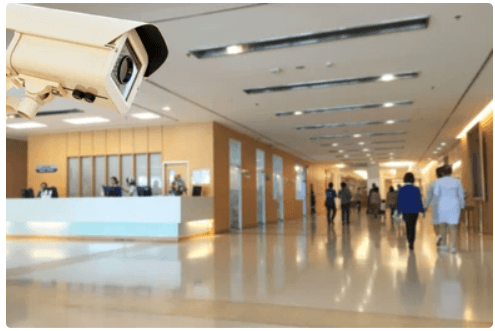
Healthcare facilities require security solutions that balance comprehensive protection with strict privacy requirements. HIPAA (Health Insurance Portability and Accountability Act) compliance is non-negotiable, making healthcare CCTV monitoring uniquely challenging compared to other industries.
Understanding HIPAA Compliance Requirements
Protected Health Information (PHI)
HIPAA protects Protected Health Information, which includes any patient-identifiable data. Security monitoring must avoid recording areas where patient medical information is visible or discussed.
Restricted Recording Areas
- Patient examination rooms
- Pharmacy areas displaying prescriptions
- Radiology departments with imaging screens
- Medical records storage areas
- Any area where patient data is visible to cameras
Permissible Monitoring Areas
- Facility entrances and exits
- Public corridors and waiting areas
- Administrative offices
- Supply storage areas
- Parking facilities and external perimeter
Privacy Rule Compliance
The HIPAA Privacy Rule requires patient consent for certain monitoring activities and restricts how video footage can be used and stored. Violations result in fines up to $1.5 million annually.
Strategic Camera Placement for Healthcare
Entry and Exit Monitoring
Main Entrances
High-resolution cameras monitor all public entry points, providing identification of all individuals entering facilities. This protects against unauthorized access and documents facility usage patterns.
Emergency Department Access
Emergency departments require dedicated monitoring for patient and staff safety, documenting incident details when violence or theft occurs.
Staff Access Points
Monitor employee entrances separately to create accountability and prevent unauthorized personnel access to clinical areas.
Administrative Area Security
Pharmacy Areas
Strategic monitoring of pharmacy areas without recording prescription details protects controlled substance security. Cameras focus on access points and storage areas rather than prescription counters.
Medical Records Storage
Record rooms require access monitoring to prevent unauthorized patient record access, supporting HIPAA audit trails.
Laboratory Areas
Monitor laboratory entry points and specimen storage areas to prevent tampering and ensure chain-of-custody compliance.
Advanced Features for Healthcare CCTV
Metadata Privacy Technology
Modern healthcare CCTV systems incorporate privacy-preserving technology:
Zone Masking
Automatically blur specific areas where PHI might be visible, preventing recording while maintaining perimeter security monitoring.
Intelligent Privacy Buffers
Create virtual boundaries where recording is suppressed unless motion is detected, balancing monitoring with privacy requirements.
Redaction Capabilities
Automatically redact sensitive areas from footage before review or archiving, maintaining privacy compliance.
Incident Response and Documentation
Violence Prevention and Response
Healthcare workers face disproportionate violence rates. CCTV monitoring supports safety:
- Real-time operator monitoring identifies escalating situations
- Rapid emergency response coordination
- Complete incident documentation for investigations
- Evidence for law enforcement and legal proceedings
- Threat pattern identification
Medication and Supply Theft Prevention
Healthcare facilities lose significant value through medication and supply theft:
Controlled Substance Security
- Access logging with video verification
- Pharmacy monitoring without prescription visibility
- Stock reconciliation with video evidence
- Disposal documentation
High-Value Supply Protection
- Surgical equipment monitoring
- Diagnostic equipment security
- Medical device tracking
- Inventory reconciliation support
Data Security and Retention Policies
Secure Storage and Access
Healthcare CCTV footage must be stored securely with encrypted access:
- Encrypted storage systems
- Role-based access control
- Audit trails for footage access
- Secure disposal procedures
- Regular security updates
Retention Compliance
- Retain footage per facility policy and regulations
- Implement automatic archival and deletion procedures
- Segregate footage containing PHI
- Document retention justifications
Staff Training and Accountability
Employee Monitoring and Privacy Balance
Monitoring staff areas requires clear policies balancing security with privacy rights:
- Written monitoring policies distributed to all staff
- Privacy expectation management
- Monitoring use limitations
- Investigation protocols
Incident Investigation Procedures
- Documented protocols for footage review
- Authorization requirements for investigations
- Confidentiality agreements for reviewers
- Legal review for sensitive incidents
Compliance Documentation
Required Records and Audits
Maintain comprehensive documentation supporting HIPAA compliance:
Security Risk Assessment
- Annual assessment of security vulnerabilities
- CCTV system evaluation and justification
- Privacy impact analysis
- Compliance improvement plans
Monitoring Policies
- Written policies for all CCTV monitoring
- Privacy protection procedures
- Incident response protocols
- Staff access and training documentation
Audit Trails
- System access logs with timestamps
- Footage access documentation
- Incident investigation records
- Enforcement action documentation
Integration with Facility Management
Emergency Response Coordination
CCTV monitoring integrates with emergency systems:
- Fire alarm system coordination
- Emergency communication systems
- Evacuation procedure documentation
- Active threat response protocols
Parking and External Security
Extend CCTV monitoring beyond facility walls:
- Parking area surveillance for employee and visitor safety
- Perimeter monitoring for unauthorized access prevention
- Lighting coordination with camera systems
- External threat identification
Conclusion
Healthcare facility CCTV monitoring must carefully balance comprehensive security protection with strict privacy requirements. By understanding HIPAA compliance requirements, implementing privacy-preserving technology, and maintaining proper documentation, healthcare facilities can achieve effective security while maintaining patient privacy and regulatory compliance.
Contact SecureVision247 for healthcare-specialized CCTV monitoring solutions designed to meet HIPAA requirements while providing comprehensive facility protection.